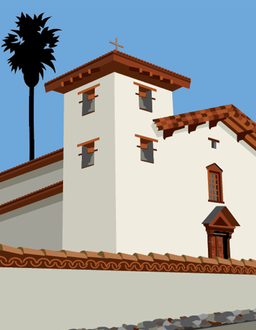
Guide to visiting all 21 missions
So you want to visit all the missions? Do it! Scroll down to learn more about each one and get advice on how to make the most of your visit.

Explore the 21 Missions
Learn more about each of the 21 missions and the special features of each one. We will start with Mission San Diego (the southern most mission) and then move north up the El Camino Real.
- Mission San Diego de Alcalá (1769) San Diego
- Mission San Luis Rey de Francia (1798) Oceanside
- Mission San Juan Capistrano (1776), San Juan Capistrano
- Mission San Gabriel Arcángel (1771), San Gabriel
- Mission San Fernando Rey de España (1797), Mission Hills
- Mission San Buenaventura (1782), Ventura
- Mission Santa Bárbara (1786), Santa Barbara
- Mission Santa Inés (1804), Solvang
- Mission La Purísima Concepción (1787), Lompoc
- Mission San Luis Obispo de Tolosa (1772), San Luis Obispo
- Mission San Miguel Arcángel (1797), San Miguel
- Mission San Antonio de Padua (1771), Jolon
- Mission Nuestra Señora de la Soledad (1791), Soledad
- Mission San Carlos Borroméo de Carmelo (1770), Carmel
- Mission San Juan Bautista (1797), San Juan Bautista
- Mission Santa Clara de Asís (1777), Santa Clara
- Mission San José (1797), Fremont
- Mission San Francisco de Asís (1776), San Francisco
- Mission San Rafael Arcángel (1817), San Rafael
- Mission San Francisco Solano (1823), Sonoma
- Tips for visiting the missions


Take the following quiz and then press the submit button to see how well you did
Short Overview of the Mission Era
Franciscan priests established 21 missions between 1769 and 1833 in Alta California. Below are some important points about this colonization
Early Explorers
Juan Cabrillo (1542) – first European to explore the coast
Sir Francis Drake (1579) – sailed up the Pacific coast and raided Spanish ships
Sebastian Vizcaino (1602) – mapped the coast and renamed many places from San Diego to Monterey
What did the early explorers learn?
Very difficult to sail north to Alta California from Mexico due to the contrary currents and headwinds
There did not appear to be any mineral wealth or cities rich in gold in Alta California
Bottom line – Settlement of Alta California just wasn’t thought to be worth it – too remote & difficult to reach by land or sea
About 160 years later …
The Spanish finally decide to colonize Alta California
Russian fur traders were coming down the coast from Alaska
In short, the need to settle Alta California was defensive – the lucrative Manila galleon trade threatened
“Sacred Expedition” of 1769
Presidios and missions were to be established beginning with the known harbors of San Diego and Monterey
The expedition would have 5 groups: 2 parties would travel overland; 3 ships would carry equipment/supplies to provision the forts and missions – they would first meet up in San Diego
Why rely on missions? Why not towns?
Very few people from New Spain (Mexico) were willing to settle permanently in Spain’s most distant colony – but Junipero Serra and the Franciscans were willing
Spanish colonial playbook: convert native inhabitants and teach them Spanish trades, language, agriculture and religion. Eventually, missions would be self sustaining
Mission Era
The first 9 Missions were developed under the Serra presidency
Another 9 Missions developed under Ferman de Lausen’s presidency; another 3 were added later
By 1833, the Missions had been secularized by the Mexican government and mission lands divided
“Siempre adelante!”
Watch, Read, Listen
No posts were found.
 Alta California Missions